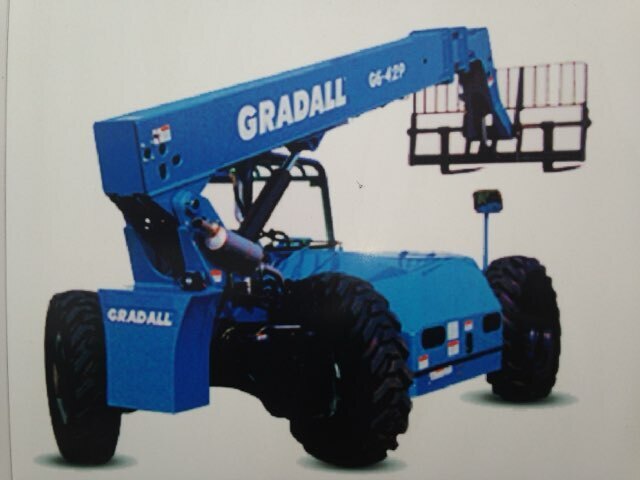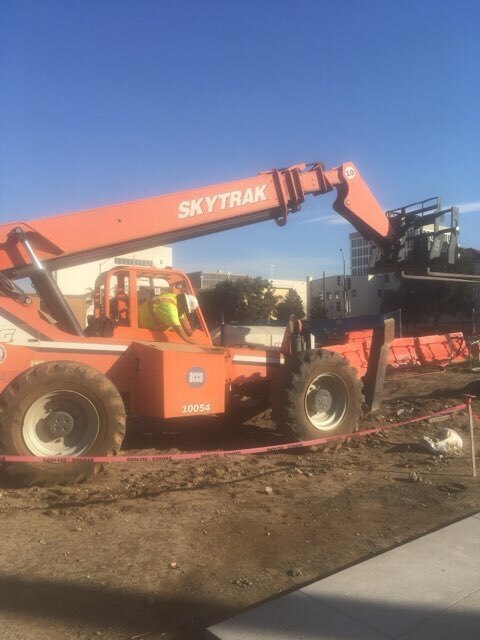

A telehandler brake system is a complex assembly of hydraulic, mechanical, and electronic components that require specialized knowledge to service properly. During a professional telehandler brake service, technicians examine brake fluid condition, master cylinder operation, brake pad thickness, rotor integrity, parking brake function, and hydraulic line condition to ensure your machine operates safely under load. Each component plays a critical role in stopping a multi-ton piece of equipment that may be carrying materials at height.
Understanding what happens during a thorough brake inspection helps you recognize when your equipment needs professional attention and what to expect when a technician arrives on site. This knowledge also supports better maintenance planning and helps prevent costly downtime.
Why Brake System Inspections Matter for Heavy Equipment
Brake failures on telehandlers create dangerous situations for operators and nearby workers. A machine weighing several tons, especially when loaded and working on slopes or uneven terrain, relies entirely on brake system integrity to prevent runaway incidents. Regular inspections catch wear patterns before they become failures.
Most telehandler brake systems use wet disc brakes or oil-immersed brakes located at the axle. These designs protect braking components from environmental contamination, but they also make visual inspection more difficult without disassembly. Professional technicians use specific procedures to evaluate these sealed systems without unnecessary teardown.
How Brake Systems Differ Across Telehandler Models
Not all telehandlers use identical brake configurations. Some models feature hydraulic service brakes with mechanical parking brakes, while others integrate both functions into a single hydraulic system with spring-applied, hydraulically-released parking components. Compact models may use simpler drum brake assemblies, whereas larger machines employ multi-disc wet brake packs.
Technicians must identify the specific system installed on your machine before beginning service work. This identification determines which test procedures, specifications, and replacement parts apply. Service manuals provide pressure specifications, adjustment procedures, and torque values unique to each manufacturer and model year.
Brake Fluid Quality and Contamination Assessment
Hydraulic brake fluid absorbs moisture over time, which lowers its boiling point and reduces braking performance under heavy use. Technicians test fluid condition using test strips that measure moisture content and examine the fluid visually for discoloration, cloudiness, or particulate contamination. Dark or murky fluid typically indicates internal seal degradation or corrosion.
Contaminated fluid accelerates wear on internal components like master cylinder seals and caliper pistons. During service, technicians also check for proper fluid level in the reservoir and inspect the reservoir cap seal for damage that might allow moisture entry. Kns Equipment Services Corp evaluates these conditions as part of comprehensive brake inspections to prevent premature component failure.
Master Cylinder and Brake Valve Inspection
The master cylinder generates hydraulic pressure when the operator presses the brake pedal. Technicians test pedal feel, travel distance, and resistance to identify internal seal wear or air in the system. A spongy pedal usually signals air entrapment, while a pedal that slowly sinks to the floor under constant pressure indicates master cylinder bypass caused by worn seals.
Brake valves distribute hydraulic pressure to individual wheel circuits and often include proportioning functions to balance front and rear braking force. Technicians inspect these valves for external leaks, corrosion, and proper operation. Many systems include pressure switches that activate warning lights, which technicians test to verify electrical function and correct pressure thresholds.
Brake Pad and Disc Wear Measurement in Southern California
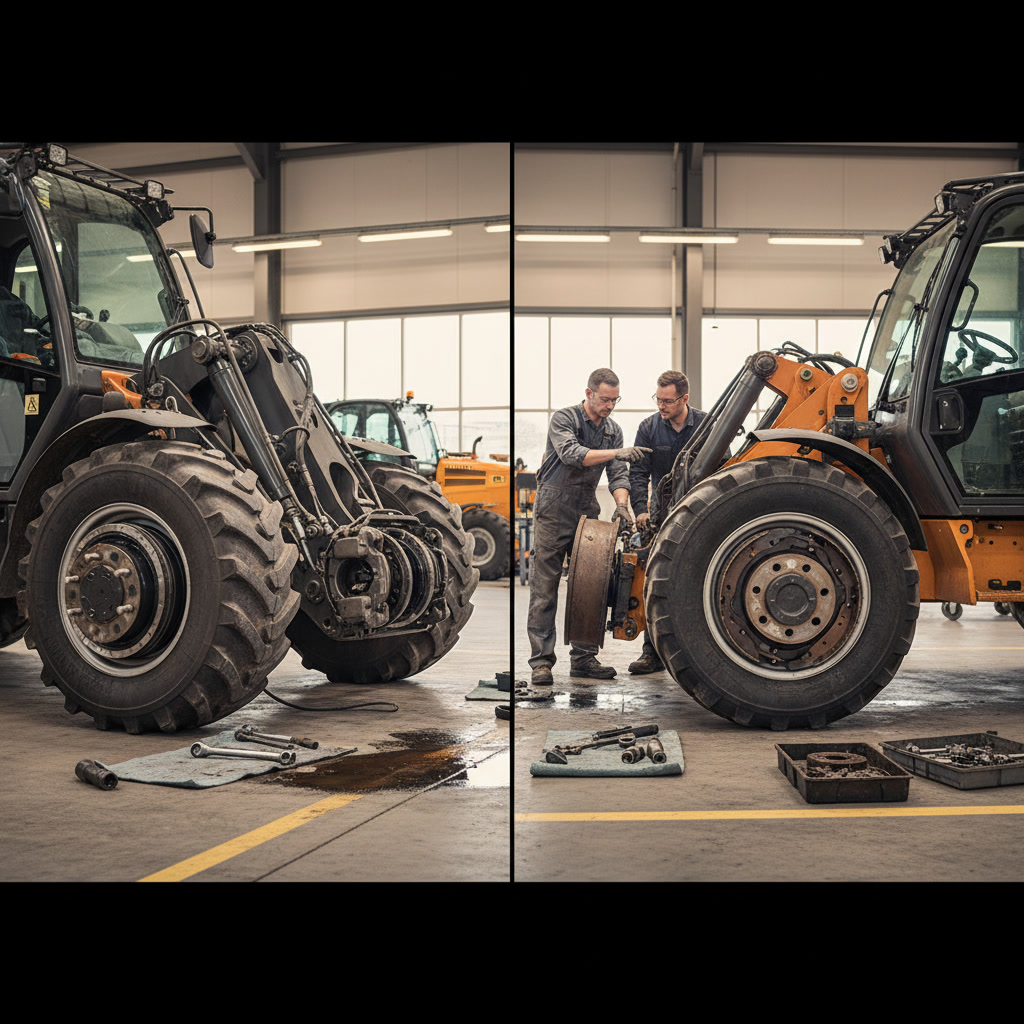
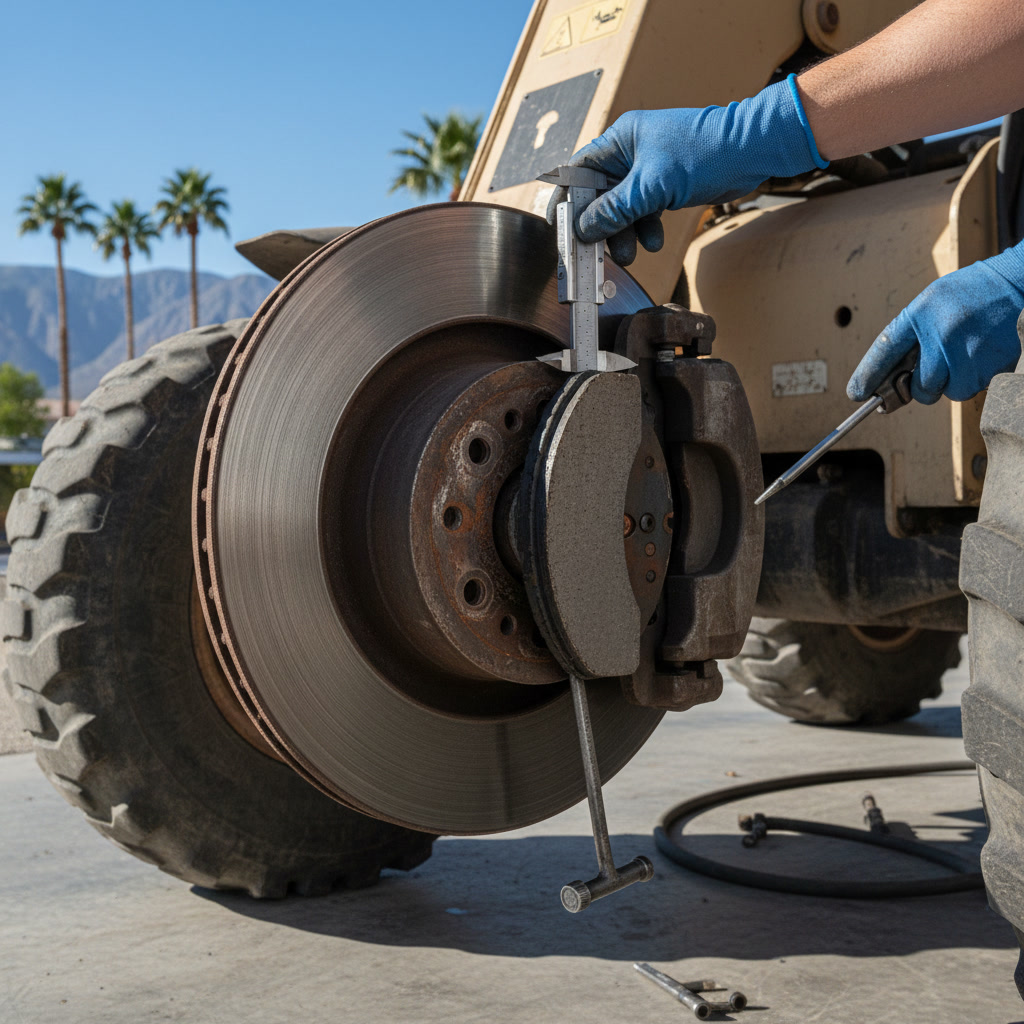
Measuring brake pad thickness requires partial disassembly in most telehandler designs. Technicians remove inspection covers or wheel assemblies to access the brake pack, then use calipers or micrometers to measure remaining friction material. Manufacturers specify minimum thickness values, typically between 3mm and 5mm depending on the original pad thickness and machine capacity.
Brake discs are inspected for scoring, heat cracks, warping, and thickness variation. A dial indicator measures disc runout to identify warping that causes pedal pulsation and uneven pad wear. Heat checking appears as fine radial cracks on the disc surface and indicates the brakes have experienced severe thermal stress, often from prolonged downhill operation or repeated emergency stops with heavy loads.
Operating conditions across Southern California vary dramatically, from dusty construction sites in the Inland Empire to coastal warehouse facilities with salt air exposure. These environments affect brake wear rates and require tailored inspection intervals.
Caliper Function and Seal Integrity Testing
Brake calipers contain pistons that press pads against discs when hydraulic pressure builds. Technicians check for even piston movement by observing pad contact patterns and measuring piston extension. Uneven movement indicates a stuck piston or collapsed seal, which causes one pad to wear faster than its mate.
External seal leaks appear as wet spots or fluid trails around piston boots and caliper bodies. Internal leaks are harder to detect but reveal themselves through poor braking performance and fluid loss without visible external leakage. Technicians pressurize the system and watch for fluid seepage during extended pressure hold tests.
Parking Brake System Evaluation
Parking brakes on telehandlers use either mechanical linkages that engage dedicated brake shoes or spring-applied hydraulic systems that activate when hydraulic pressure releases. Technicians test holding capacity by engaging the parking brake on an incline and verifying the machine remains stationary under its own weight.
Mechanical parking brake cables and linkages require inspection for fraying, corrosion, and proper adjustment. Cable tension affects holding power, and technicians measure free play at the control lever to ensure adjustment falls within specifications. Spring-applied systems require pressure testing to confirm the hydraulic release mechanism functions correctly and that springs maintain adequate force.
Hydraulic Line and Fitting Condition Check
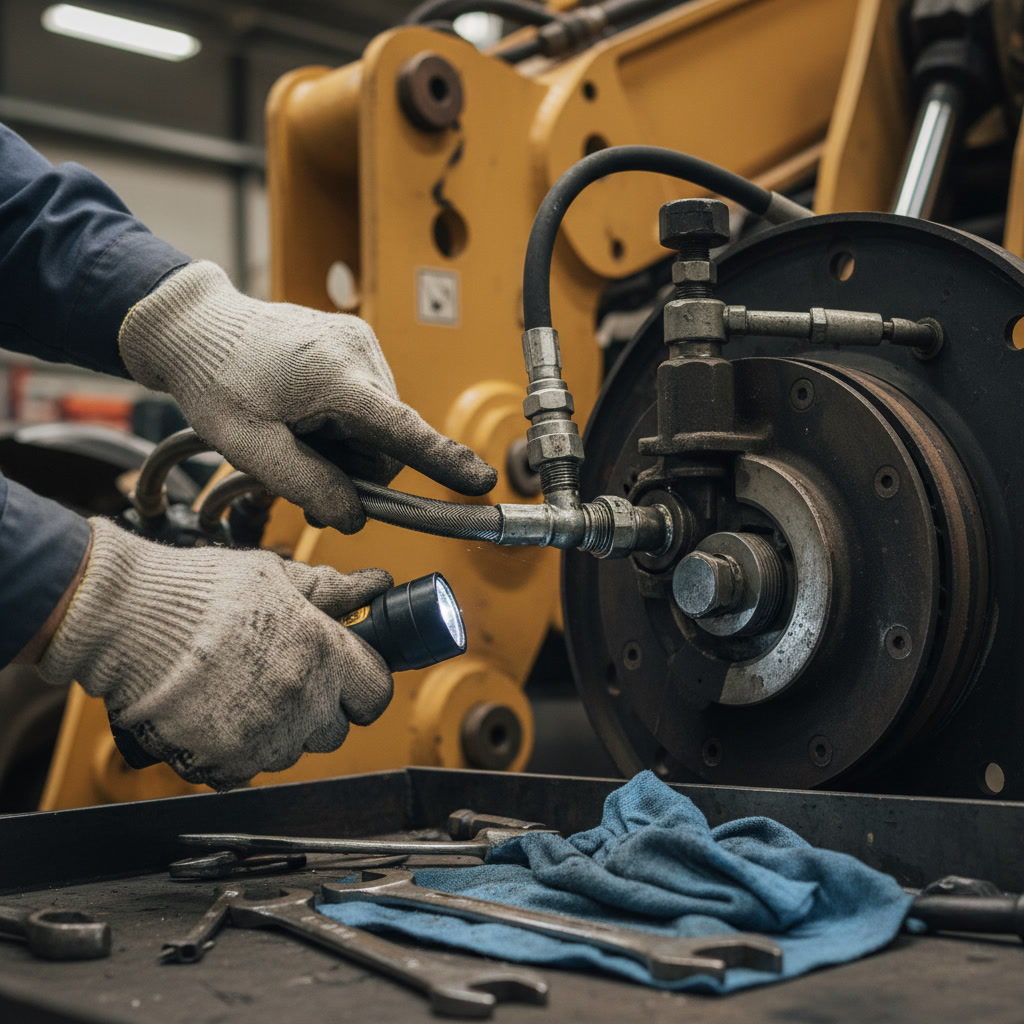
Brake hydraulic lines run from the master cylinder to each wheel, often routing through the chassis and articulation points where flexing occurs. Technicians inspect lines for abrasion, cracking, bulging, and proper routing away from heat sources and moving components. Reinforced rubber hoses have service life limits regardless of appearance, typically five to seven years depending on environmental exposure.
Fittings connect rigid lines to flexible hoses and calipers. These connections are inspected for corrosion, cross-threading, and proper torque. Loose fittings cause air entry and pressure loss, while over-torqued fittings crack and leak. Technicians often apply additional torque to suspect fittings and retest system pressure to verify repair effectiveness.
Brake System Pressure Testing and Adjustment
Professional brake service includes connecting pressure gauges to test ports in the hydraulic system. Technicians measure static pressure with the brake pedal released and dynamic pressure during pedal application. These readings are compared against manufacturer specifications to identify pump wear, valve malfunctions, or system leaks.
Some telehandler brake systems include adjustable components like brake rod length or caliper position. Technicians make these adjustments according to service manual procedures, then retest to confirm proper pedal height, travel distance, and braking force. Adjustments affect how quickly brakes engage and how much pedal effort operators must apply.
Electronic Brake Monitoring System Diagnostics
Modern telehandlers often include electronic monitoring that tracks brake pressure, fluid level, and system faults. Technicians connect diagnostic tools to read stored fault codes and live data streams showing real-time sensor values. These tools identify intermittent problems that may not be apparent during physical inspection.
Pressure sensors, fluid level switches, and brake light switches are tested individually to verify proper operation. Faulty sensors can trigger nuisance warnings or, worse, fail to alert operators to genuine brake system problems. Technicians also inspect wiring harnesses for damage, corrosion, and secure connections at each sensor.
Understanding what happens during a telehandler annual safety inspection provides additional context for how brake system checks fit into comprehensive equipment evaluations. Electronic diagnostics increasingly overlap with other machine systems, making integrated testing more valuable.
Keeping Your Equipment Safe and Compliant
A thorough brake system inspection covers hydraulic fluid condition, master cylinder function, pad and disc wear, caliper operation, parking brake capacity, hydraulic line integrity, system pressure, and electronic monitoring components. Each element contributes to safe, reliable stopping power under the demanding conditions telehandlers face daily.
Regular professional inspections identify wear before it becomes dangerous and help you plan maintenance during scheduled downtime rather than responding to emergency failures. Qualified technicians bring the diagnostic tools, manufacturer specifications, and hands-on experience needed to evaluate these complex systems accurately.
Kns Equipment Services Corp provides professional on site field service and repairs for telehandler brake systems and other critical equipment components. If your machine shows signs of reduced braking performance, unusual noises, or warning lights, contact our team at +15622925718 to schedule an inspection.