Your scissor lift just stopped working in the middle of a job, and now you need reliable repair service to get back to work. Understanding what quality scissor lift repair involves helps you choose the right service provider, maintain your equipment properly, and make informed decisions about equipment care and replacement timing.
This guide explains professional repair services across Southern California, what drives repair decisions, and helps you identify what makes a quality repair service. You’ll get practical information about common repairs, service considerations, and expert advice for keeping your aerial equipment running reliably.
Professional Scissor Lift Repair Services in Southern California
Scissor lift repairs vary widely depending on the problem and equipment type. Small electric scissor lifts typically have different service needs than large diesel or rough-terrain models.
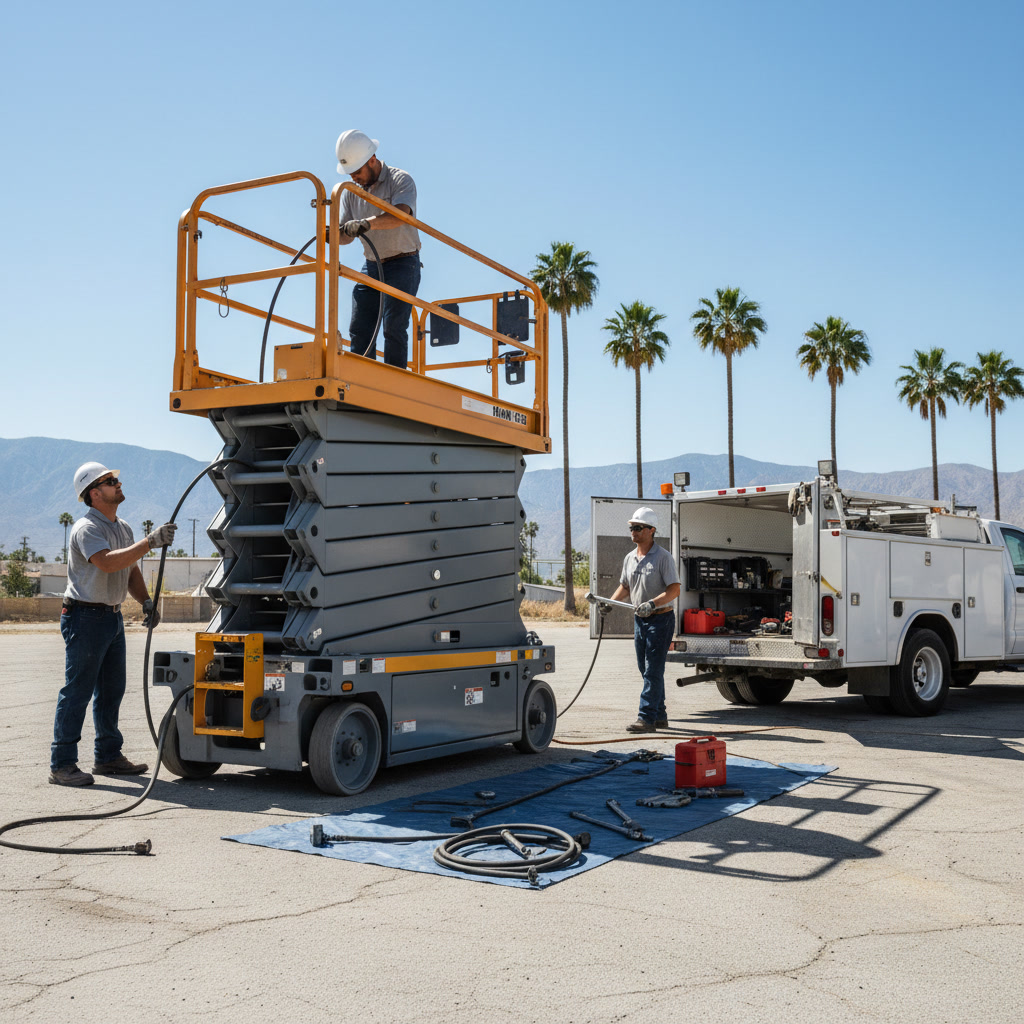
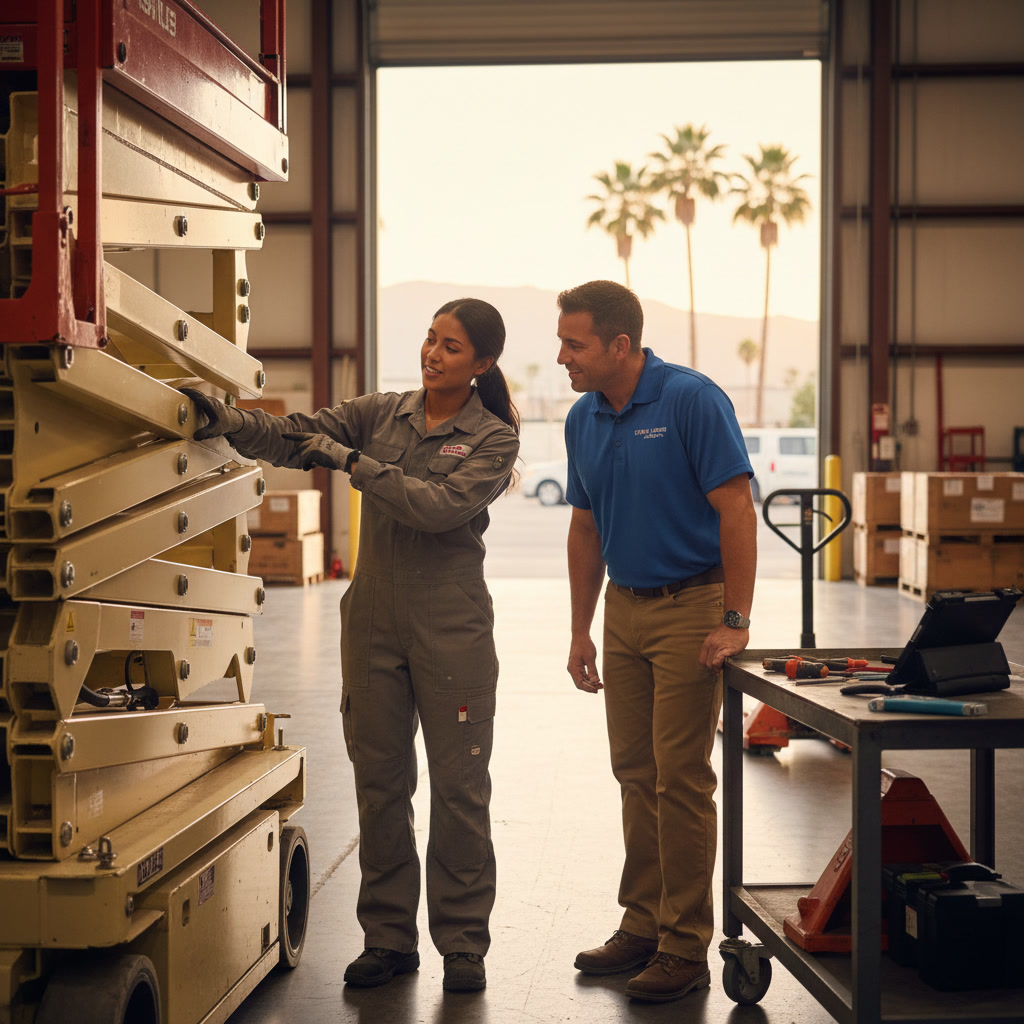
Professional mobile technicians provide on-site diagnostics with full equipment inspections. Quality service includes thorough assessment of the issue and explanation of the repair needed.
Certified aerial equipment technicians bring specialized expertise to each service call across the region. The complexity of repairs varies dramatically based on the manufacturer, model age, and component availability.
Common Scissor Lift Repairs and Service Needs
Certain components fail more frequently than others, and knowing these common issues helps you anticipate maintenance needs and understand what quality repair service addresses.
Hydraulic System Repairs
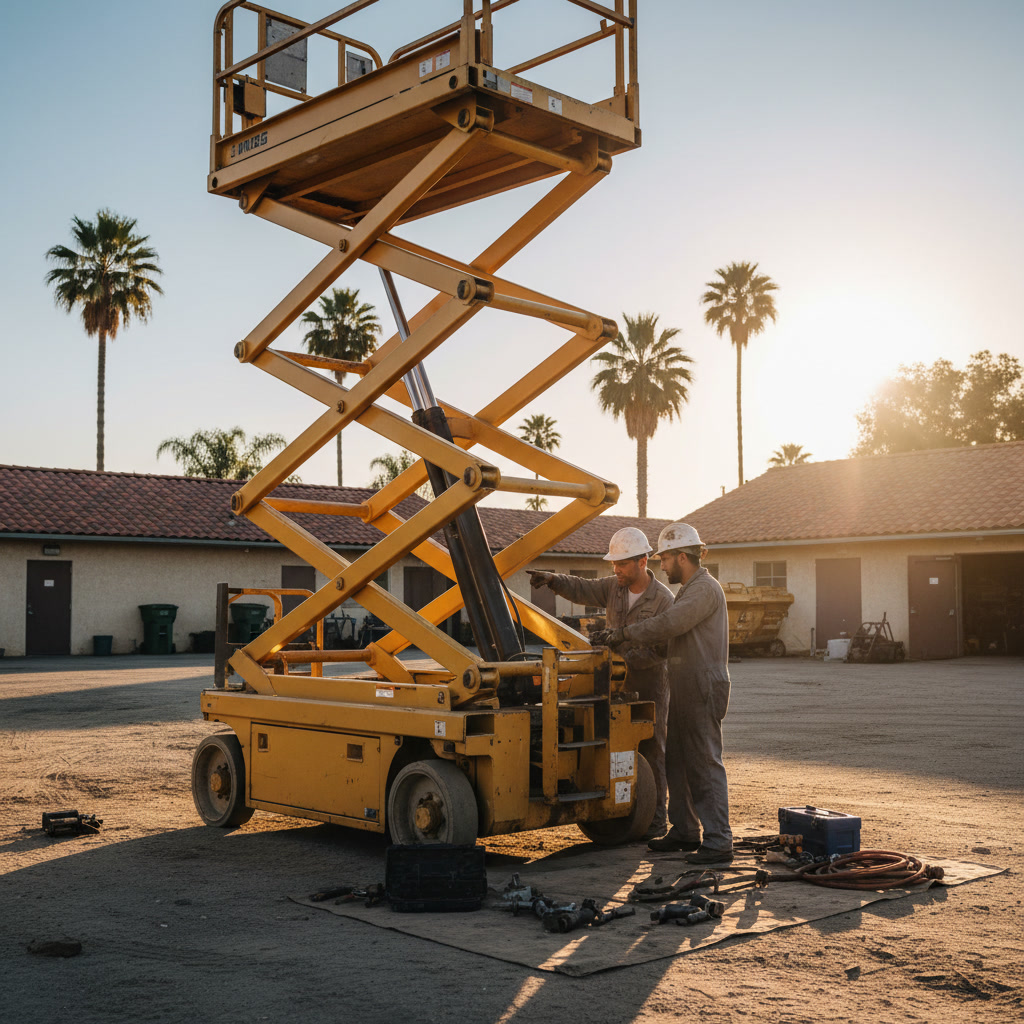
Hydraulic leaks are among the most common issues requiring professional attention. Simple hose replacements are routine services, while cylinder seal replacements require more extensive work depending on accessibility.
Complete hydraulic cylinder replacements represent more involved repairs. Hydraulic fluid flushes and refills are important maintenance services depending on system capacity and condition.
Electrical System Repairs
Faulty limit switches require professional replacement to ensure safe operation. Control panel repairs vary depending on the damage extent and complexity. Wiring harness repairs or replacements address electrical system failures.
Battery charger repairs and replacements keep electric lifts operational. Emergency stop button replacements are critical safety repairs that require proper installation.
Platform and Structural Repairs
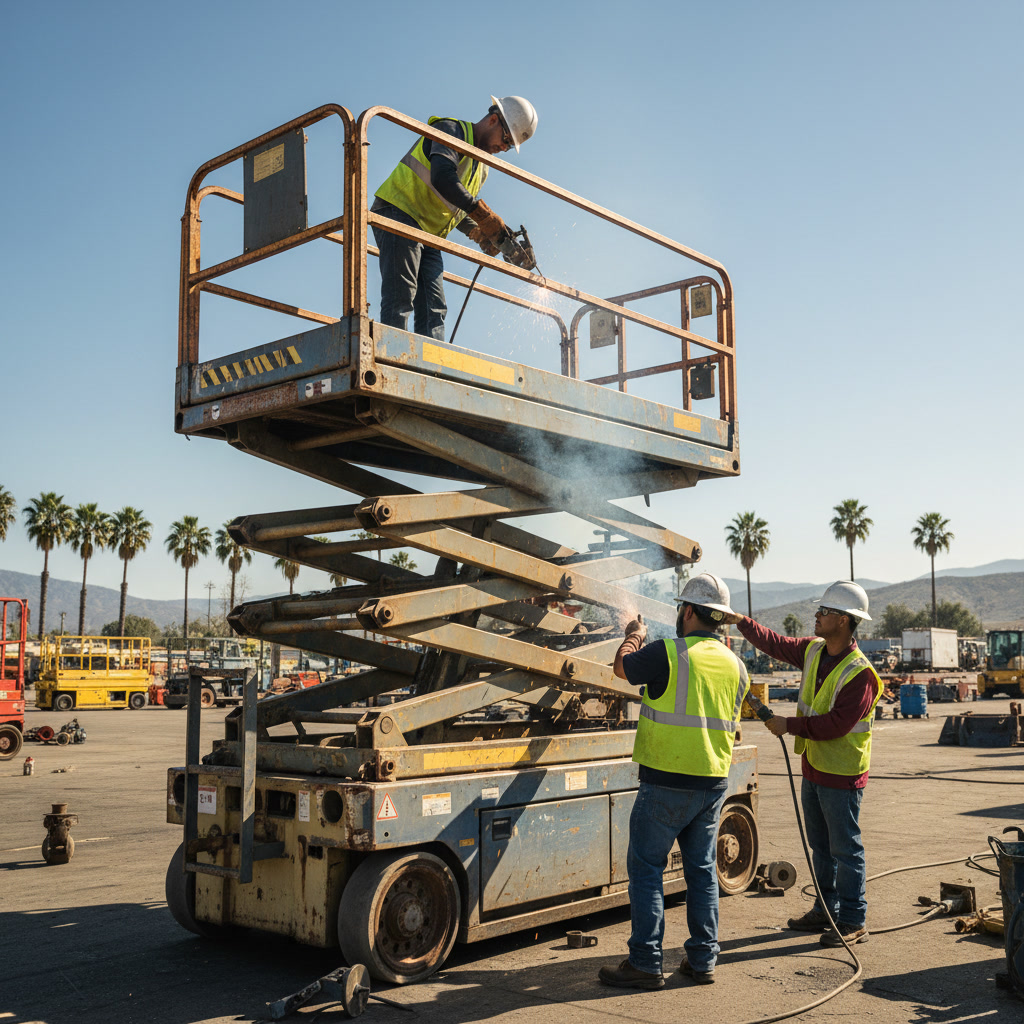
Damaged platform decking requires professional replacement to maintain safety standards. Guardrail repairs ensure operator protection depending on the extent of damage. Scissor arm pin replacements are essential mechanical services.
Structural welding for cracked frames or arms requires certified welding expertise and proper load testing to ensure equipment safety and compliance.
Factors That Affect Your Repair Service
The scope of fixing your scissor lift depends on multiple variables beyond just the broken component. Understanding these factors helps you get more accurate service recommendations and avoid surprises.
Equipment Age and Condition
Older scissor lifts often present more complex repair challenges because parts become harder to source. Discontinued models may require custom fabrication or used parts, adding time and complexity. Equipment over 15 years old typically requires more extensive service evaluation than newer models.
Well-maintained lifts with documented service histories generally have more straightforward repairs because problems get caught early. Neglected equipment often has multiple issues that compound repair complexity.
Brand and Model Considerations
Major brands like Genie, JLG, and Skyjack have better parts availability and service support. Uncommon or imported brands may require special-order parts with longer wait times.
Specialized or custom scissor lifts require more specialized service expertise due to unique components. Standard warehouse models benefit from widespread parts availability and technician familiarity.
Location and Service Type
Mobile on-site repairs provide convenience by bringing service directly to your equipment location. Remote locations in Southern California may require additional coordination for service visits. Urban areas with multiple service providers typically have more options than rural regions.
Emergency after-hours repairs require immediate response capabilities. Scheduled maintenance visits usually offer the most efficient service delivery.
Pro Tip: Work with certified technicians who specialize in aerial equipment for the most reliable repairs. Specialist knowledge ensures accurate diagnostics and quality workmanship.
When Repair Makes Financial Sense
Not every broken scissor lift deserves a repair investment. Smart equipment managers evaluate repair scope against replacement value and future reliability.
Consider repair when the equipment has significant remaining useful life and the issue is isolated to specific components. Comprehensive evaluation helps determine the best path forward.
Consider the equipment’s remaining useful life and overall condition. Well-maintained lifts with good service histories often warrant repair investment, while equipment with multiple recurring problems may signal replacement timing.
Factor in downtime costs too. If a broken lift is creating significant productivity losses, prioritizing quick professional service becomes important regardless of the repair scope.
How to Reduce Scissor Lift Repair Needs
Proactive maintenance and smart management practices can significantly reduce your total repair expenses over the equipment’s lifetime.
Implement Preventive Maintenance
Regular inspections catch small problems before they become expensive failures. Scheduled professional inspections prevent emergency breakdowns. Keep hydraulic fluid clean and at proper levels to avoid pump and cylinder damage.
Replace wear items like tires, batteries, and filters on schedule. These relatively inexpensive components protect more expensive systems when maintained properly.
Train Operators Properly
Operator error causes many avoidable repairs. Improper use accelerates wear on hydraulic systems, platforms, and structural components. Investment in proper training reduces damage frequency and extends equipment life.
Establish and enforce pre-operation inspection protocols. Operators who check for leaks, unusual noises, and function problems before each shift help identify issues early.
Build Relationships with Service Providers
Regular customers often receive priority scheduling and better service continuity than one-time callers. Companies like K&S Equipment Services that specialize in aerial equipment offer expertise that generalist repair shops cannot match.
Technicians familiar with your specific equipment work faster and more accurately, improving service quality. They also spot developing problems during routine visits, preventing expensive breakdowns.
Getting Quality Repair Service
Clear communication leads to better service outcomes and expectations. Quality repair companies provide detailed information that helps you make informed decisions.
Request detailed service explanations that cover diagnostic findings, recommended repairs, and any additional considerations. Ask for clarity on parts being replaced when possible.
Clarify warranty terms on both parts and labor. Reputable service providers typically warranty their work, which matters if problems recur prematurely.
Understand what the service includes and what might require additional work. Initial diagnostics may reveal problems beyond the obvious symptoms requiring further attention.
Questions to Ask Before Hiring
Verify the technician’s certifications and experience with your specific equipment type. Ask how long they’ve serviced aerial equipment and whether they have experience with your model.
Inquire about response times for both standard and emergency calls. Understand service availability and scheduling options.
Check if the company carries proper liability insurance and workers compensation coverage. This protects you from liability if accidents occur during repairs on your property.
Comparing Repair Versus Replacement
Sometimes the smart financial choice is replacing rather than repairing aging equipment. Several factors help you make this determination.
If you’re facing repeat repairs within a short timeframe, replacement often makes more sense. Equipment requiring major attention more than twice per year typically indicates it may be time to consider replacement options.
Review total annual repair history over the past two to three years. Patterns of recurring problems often signal that equipment has reached the end of its economical service life.
Consider technological improvements in newer models. Modern scissor lifts offer better fuel efficiency, longer battery life, improved safety features, and lower maintenance requirements. These operational improvements can make replacement attractive.
Financial considerations matter too. New equipment purchases may qualify for tax benefits that improve the financial equation compared to ongoing repair expenses on aging equipment.
Key Takeaway: Document all repairs with dates and problems addressed. This repair history helps you identify patterns, make replacement decisions, and maintain proper service records for safety compliance.
Regional Considerations in Southern California
Southern California presents unique factors that influence equipment service and availability. The region’s size, climate, and industrial concentration all play roles.
The mild climate reduces weather-related wear compared to regions with harsh winters or extreme humidity. However, outdoor equipment still faces UV exposure, dust, and occasional rain that require attention.
Southern California’s large industrial base means better parts availability and more service options in major metros like Los Angeles, Orange County, San Diego, and Riverside. Smaller markets like San Luis Obispo or Santa Barbara may have fewer options.
Traffic and distances affect mobile service coordination. Establishing relationships with service providers familiar with your work locations improves service efficiency and responsiveness.
Working With Independent Service Providers
Independent equipment service companies often provide better value and more personalized attention than large dealer networks. Companies like K&S Equipment Services Corp bring owner oversight to every service call, ensuring quality and accountability.
Independent providers typically focus on building long-term customer relationships rather than transactional service. They often specialize in specific equipment types, developing deep expertise that improves diagnostic accuracy and repair quality.
Owner-operated businesses have stronger incentives to maintain customer relationships, often resulting in more flexible scheduling, better communication, and willingness to work within your operational constraints.
Mobile technicians who come to your location eliminate transportation hassles and downtime associated with hauling equipment to a shop. This convenience represents significant value for busy operations.
Frequently Asked Questions
How long does a typical scissor lift repair take?
Simple repairs like replacing a limit switch or fixing a hydraulic leak take two to four hours. More complex work like motor replacement or major hydraulic repairs can require one to three days depending on parts availability. Emergency mobile repairs often happen same-day when parts are in stock, while more extensive repairs may have lead times depending on the service provider’s workload and parts sourcing.
Are scissor lift repairs covered by insurance?
Standard equipment insurance policies typically cover collision damage and certain mechanical breakdowns depending on your coverage level. Normal wear and tear repairs usually fall on the owner. Review your policy details or contact your insurance agent to understand what’s covered. Rental equipment often includes damage waivers that cover repair services, though terms vary by rental agreement.
Should I repair an older scissor lift or buy new?
Repair if the equipment has significant useful life remaining and the issue is isolated to specific components. Replace if you’re facing multiple recurring problems, the equipment is over 15 years old, or maintenance demands are becoming excessive. Consider your operational needs and equipment reliability requirements when making this decision.
Can I perform scissor lift repairs myself?
Only attempt repairs if you have proper training, tools, and manufacturer service manuals. Many repairs require specialized knowledge of hydraulic systems, electrical components, and load-bearing structures. Improper repairs create serious safety hazards and liability risks. Most jurisdictions require annual inspections by certified technicians regardless of who performs repairs. DIY maintenance like fluid checks, cleaning, and battery care is appropriate, but leave component replacement to professionals.
What should I do immediately when my scissor lift breaks down?
First, ensure the equipment is in a safe position with the platform lowered if possible. Tag the lift out of service to prevent use. Document the problem with photos and notes about what happened when the failure occurred. Contact a certified repair service promptly, as some problems worsen with time. If workers are stranded on an elevated platform, follow emergency lowering procedures in the operator manual or call emergency services if necessary.
Getting Professional Scissor Lift Repair Service
Understanding professional scissor lift repair helps you make informed maintenance decisions and choose quality service providers. Repairs in Southern California range from minor adjustments to major component replacements, with service quality and technician expertise being critical factors.
Regular maintenance, proper operator training, and prompt attention to small problems significantly reduce your total repair needs over the equipment’s lifetime. When major problems occur repeatedly, consulting with service professionals about replacement timing often makes good operational sense.
K&S Equipment Services Corp provides expert on-site scissor lift repair throughout Southern California and Central California. As an independent, owner-operated company, every service call receives direct oversight to ensure quality workmanship and professional service. Our mobile technicians bring parts and expertise directly to your location, minimizing downtime and transportation hassles. Contact us at +15622925718 for professional scissor lift repair services.