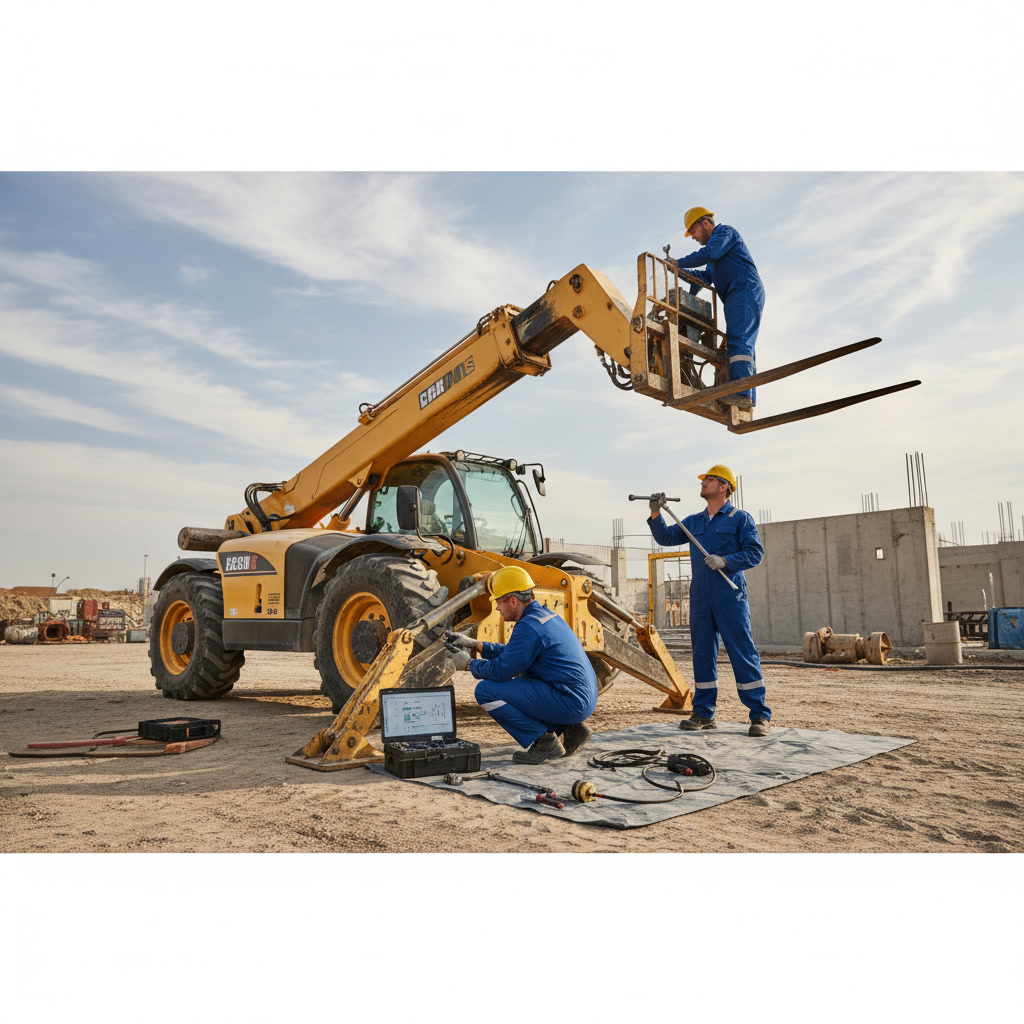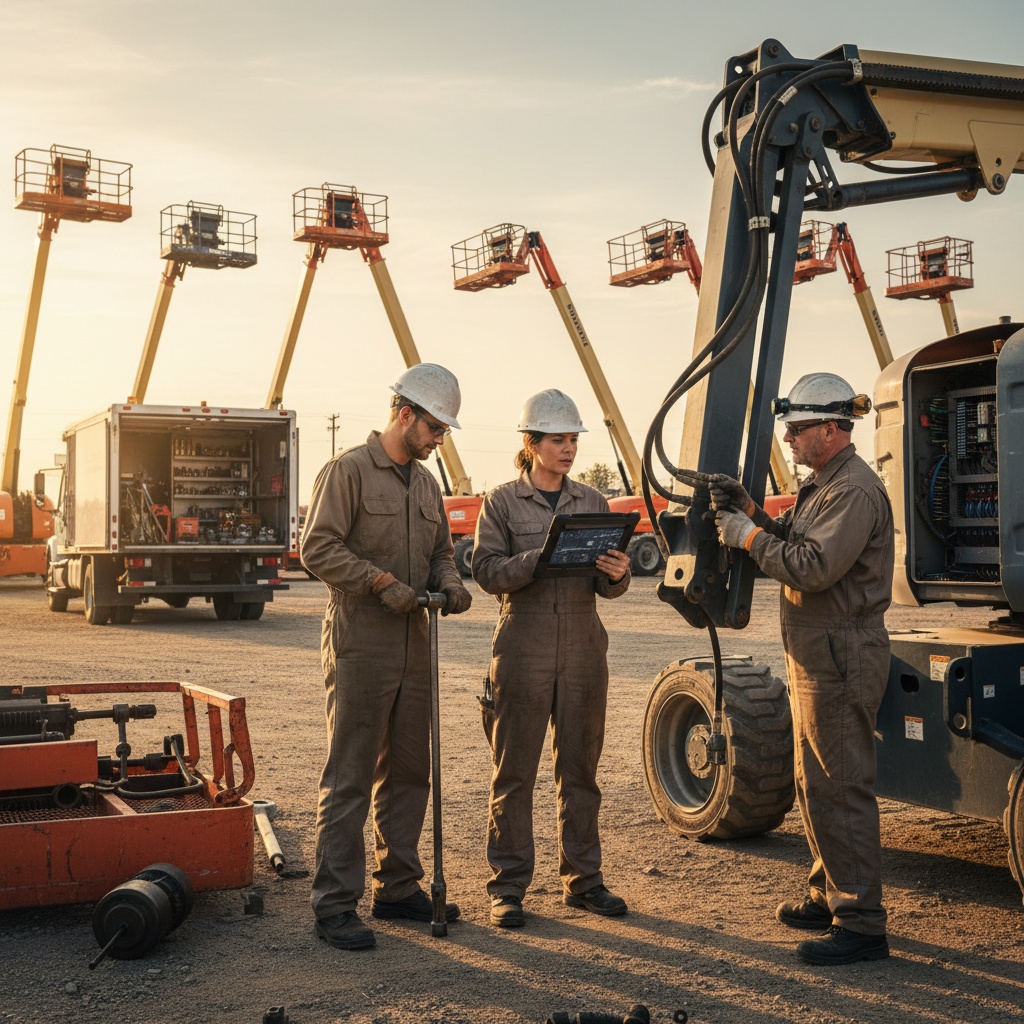
An on site equipment repair visit typically begins with a phone call to schedule service, followed by a diagnostic assessment, repair work performed at your location, and a final operational test to ensure equipment is safe and ready to use. The process minimizes downtime by bringing the shop to you, eliminating the need for costly transportation and equipment removal from your facility.
Industrial equipment downtime costs businesses thousands of dollars per hour in lost productivity. Knowing what happens during a service visit helps you prepare your site, gather necessary information, and ensure technicians can work efficiently.
Why Equipment Breakdowns Require Immediate Attention
When a boom lift stops working mid-project or a scissor lift refuses to raise, every hour of delay impacts your bottom line. Workers sit idle, deadlines slip, and rental equipment becomes an expensive temporary fix. Equipment failures rarely happen at convenient times, and waiting days for a shop appointment is not an option for most operations.
Mobile repair services solve this problem by bringing diagnostic tools, replacement parts, and expertise directly to your warehouse, job site, or facility. The technician works around your schedule and minimizes disruption to ongoing operations.
Scheduling and Initial Contact
The repair process starts when you contact the service provider with details about your equipment problem. The more specific information you provide, the better prepared the technician will be. Key details include equipment type, make and model, serial number, a description of the problem, and any error codes displayed.
The service coordinator asks about your location, site access requirements, and urgency. They schedule a visit window and provide an estimated arrival time. Some repairs can be completed the same day, while others may require ordering specialized parts.

Pre-Visit Preparation at Your Facility
Before the technician arrives, you can take several steps to speed up the repair process. Clear the area around the broken equipment to provide easy access. Gather any maintenance records, user manuals, or warranty documentation. If operators noticed specific symptoms before the failure, write down those details.
Ensure someone familiar with the equipment’s history will be available to answer questions. The technician needs to know about recent repairs, unusual sounds, performance changes, or any modifications made to the equipment.
The Diagnostic Phase in Southern California Facilities
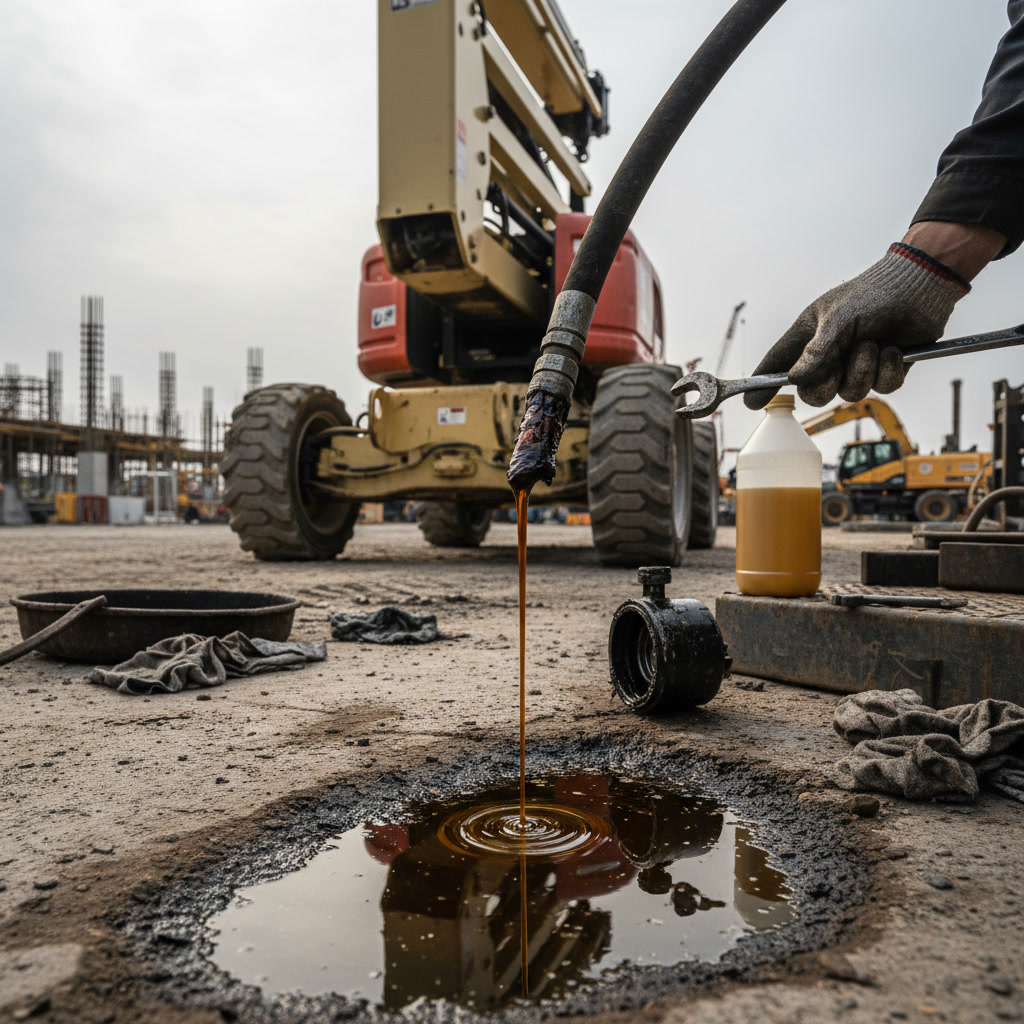
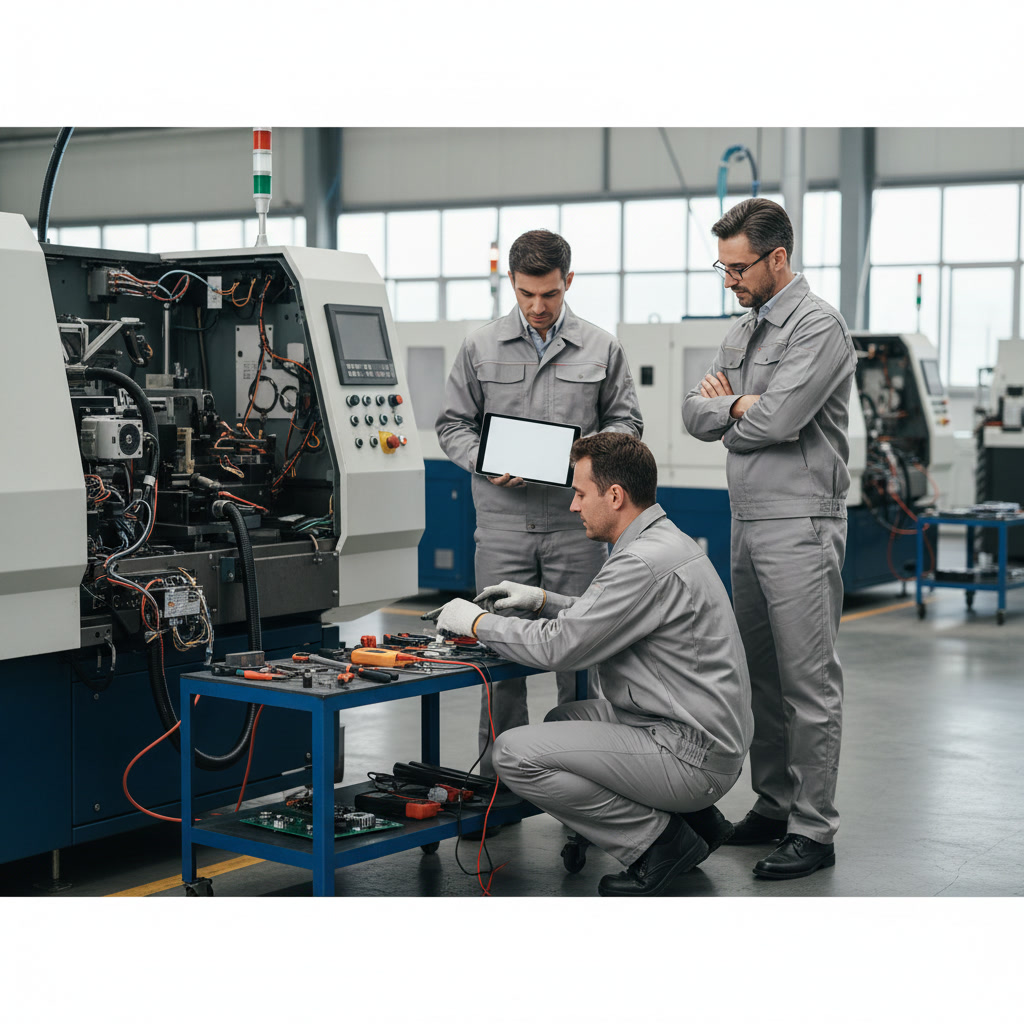
When the technician arrives, they begin with a visual inspection and safety check. They examine hydraulic lines for leaks, electrical connections for damage, structural components for wear, and control systems for obvious faults. This initial walk-around often reveals problems not mentioned in the service call.
Next comes the functional diagnostic phase. The technician operates the equipment, tests individual systems, and uses diagnostic tools to read error codes and measure performance parameters. For aerial equipment like boom lifts or scissor lifts, they check safety interlocks, emergency systems, and load capacity functions.
Many experienced technicians can identify common problems within minutes. Hydraulic cylinder seal failures, battery connection issues, solenoid malfunctions, and limit switch problems follow predictable patterns. The diagnostic phase typically takes 30 to 90 minutes depending on equipment complexity.
Step-by-Step Repair Process
Once the problem is identified, the technician explains the issue, the required repair, and estimated time. After approval, the actual repair work begins following these general steps:
- Lock out and tag out the equipment following safety protocols
- Remove or disassemble components blocking access to the failed part
- Replace or repair the defective component
- Reassemble systems and verify all connections
- Restore power and hydraulic pressure
- Test each function individually before full operation
Simple repairs like replacing a battery, tightening loose connections, or adjusting limit switches may take less than an hour. Complex issues involving hydraulic pump replacement, electrical harness repair, or structural welding can require several hours or multiple visits if parts must be ordered.
Parts Availability and Common Solutions
Service vehicles carry an inventory of common replacement parts: hydraulic hoses, fittings, seals, batteries, fuses, relays, switches, and filters. This allows technicians to complete most repairs during the first visit. For specialized components like control boards, motors, or custom hydraulic cylinders, the technician orders the part and schedules a follow-up visit.
Quality repair services maintain relationships with parts suppliers and manufacturers to expedite shipping. Understanding typical lead times for your equipment type helps you plan around extended downtime when necessary.
When choosing a repair provider, ask about their parts inventory and supplier network. Companies specializing in equipment repairs typically stock a broader range of components than general maintenance providers.
Safety Testing and Compliance Verification
After completing the repair, the technician performs comprehensive safety testing. This is not optional. Aerial equipment, golf carts, industrial electric carts, and other industrial machinery must meet strict safety standards before returning to service.
Testing includes verifying all emergency stop functions work correctly, inspecting safety interlocks and limit switches, checking load capacity and stability, testing backup and redundant systems, and confirming proper operation under load. The technician documents these tests and notes any additional concerns discovered during the repair.
For certain equipment types, annual inspections and certifications are legally required. Ask the technician if your equipment is due for scheduled inspection and whether the current visit can satisfy those requirements.
Documentation and Service Records
Professional service providers document every repair visit with detailed records. This paperwork includes the problem description, diagnostic findings, parts replaced, labor hours, test results, and recommendations for future maintenance. You receive a copy for your records.
These service records prove valuable in several ways. They help track recurring problems that might indicate a larger issue, provide warranty documentation for parts and labor, satisfy insurance and compliance requirements, and establish maintenance history when selling equipment.
Keep all service documentation organized by equipment serial number. This history helps future technicians diagnose problems faster and reveals patterns that might justify replacement rather than continued repairs. Understanding how to choose the best mobile equipment repair service includes evaluating their documentation practices.
Operator Training and Prevention Tips
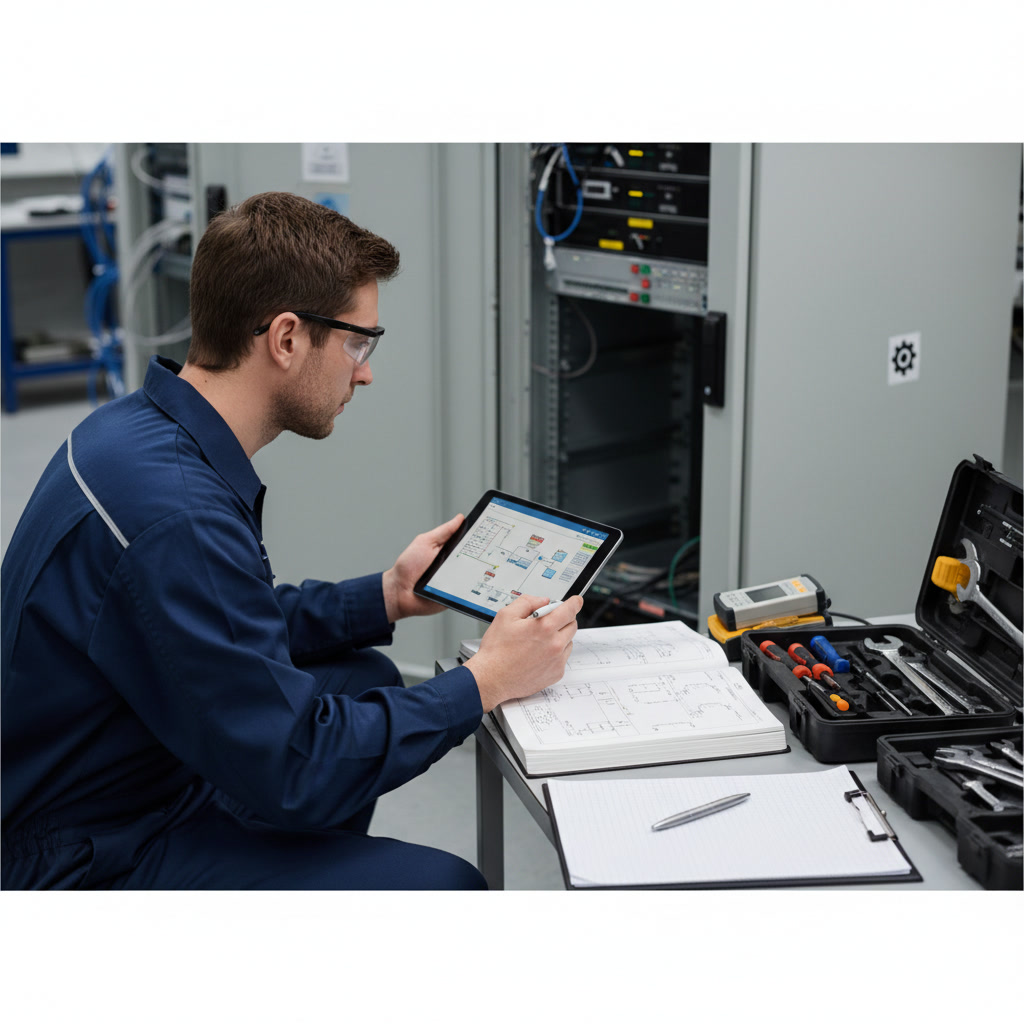
Before leaving, many technicians provide brief operator guidance to prevent future failures. They point out signs of developing problems, explain proper operating procedures that reduce wear, demonstrate correct maintenance tasks operators should perform, and answer questions about equipment limitations.
This informal training session is extremely valuable. Operators who understand how their equipment works and what sounds or behaviors indicate trouble can catch small problems before they become expensive failures. Ask questions during the repair visit, especially if you notice anything unfamiliar about the equipment.
Understanding Service Investment
Most on site field service and repairs include diagnostic assessment, labor, and parts replacement. Emergency after-hours service typically requires different arrangements than scheduled visits.
Contact the service provider for detailed information before authorizing repairs beyond the diagnostic phase. Reputable companies provide transparent communication and explain the scope of work. If the repair appears extensive, discuss your options with the technician.
Keep in mind that different equipment types have different repair requirements. Understanding your specific equipment’s needs and comparing repair benefits to rental or replacement options helps you make informed decisions about maintaining your fleet.
When to Replace Instead of Repair
Not every breakdown justifies repair. Equipment reaches a point where continued repairs become impractical. Consider replacement when the same component fails repeatedly despite proper repairs, parts are no longer available from manufacturers, or safety concerns cannot be fully resolved.
An experienced technician can provide honest guidance about whether repair makes sense. They see equipment at various life stages and understand when you are facing diminishing returns. This expert-level insight saves you from investing in equipment that will fail again within months.
Businesses operating fleets of boom lifts, scissor lifts, and other aerial equipment benefit from tracking maintenance history and downtime patterns. This data drives smart replacement decisions.
Keeping Your Equipment Running Reliably
Understanding what happens during a repair visit helps you maximize the value of mobile service and minimize equipment downtime. Preparation, clear communication, and attention to the technician’s recommendations extend equipment life and prevent costly emergency failures.
Regular maintenance catches problems early, when repairs are simpler and less expensive. Tracking service history, training operators properly, and addressing small issues promptly keep your equipment productive and safe.
Kns Equipment Services Corp provides owner-supervised mobile repair services throughout the region, bringing expertise directly to your facility for faster turnaround and minimal disruption. Whether you need routine maintenance or emergency breakdown service, having a relationship with a reliable repair provider reduces stress when equipment fails. Reach out at +15622925718 to schedule service or discuss your equipment’s specific needs.